You Fill the Form. We Turn It Into This.

The form helps us understand your business before we start designing.
You do not need to know what should go in the hero section, how your products should be shown, or what your website structure should look like.
Just fill the form with the information you know.
We take those answers and turn them into the right website sections.
The examples below show exactly how that happens.
01 — First Impression / Hero Section
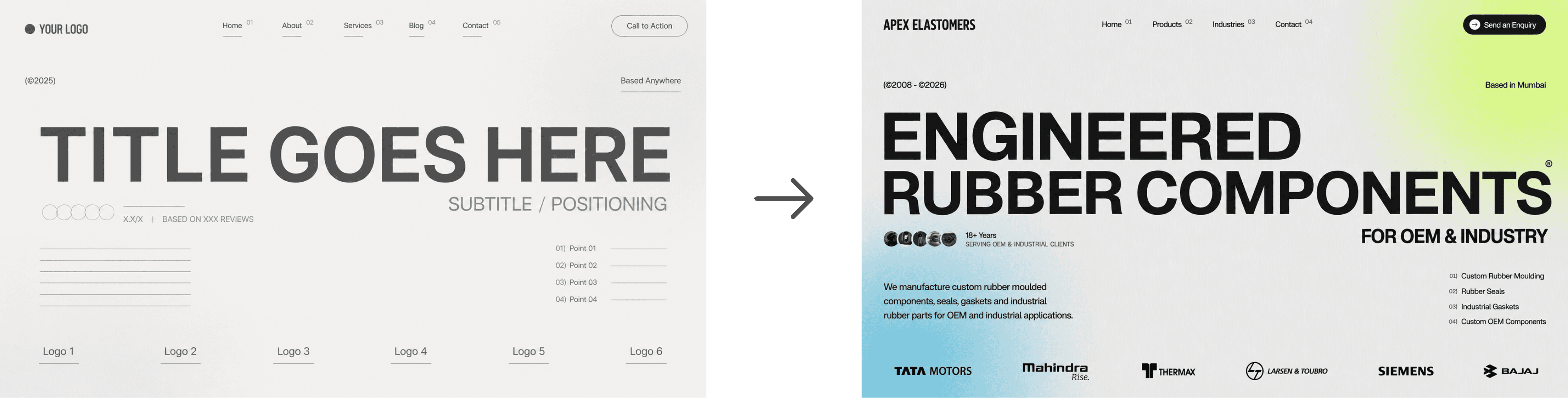
We use answers such as:
Q4: Official Business Name
Q5: New Company Name
Q7: Location / City
Q8: What does your company do?
Q9: What do you sell?
Q11: Which industries do you serve?
Q12: Who are your customers?
Q13: B2B or B2C?
Q16: Brand Personality
Q22: Main goal of the website
What do we understand from this?
We understand:
Who you are + what you do + who you do it for + how you want to be perceived.
What can this become?
For example:
ENGINEERED RUBBER COMPONENTS
FOR OEM & INDUSTRY
We manufacture custom rubber moulded components, seals, gaskets and industrial rubber parts for OEM and industrial applications.
[Explore Products]
[Send an Enquiry]
This becomes the first thing your visitor understands about your company.
02 — Company Credibility
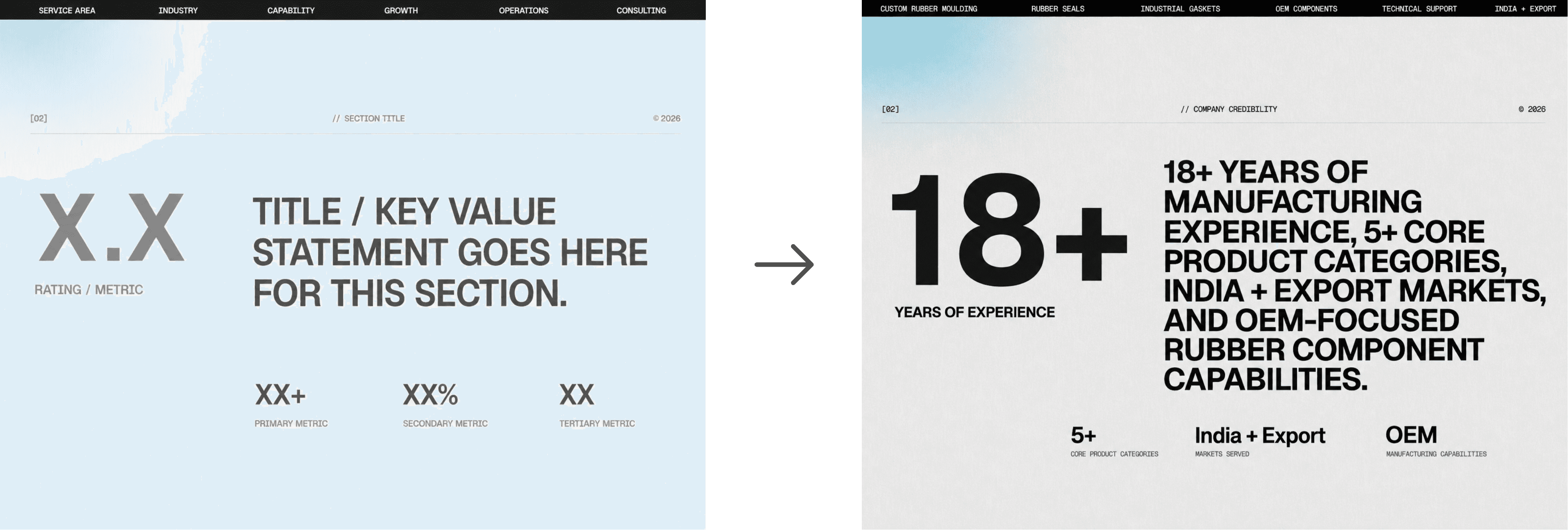
We use answers such as:
Q6: New company or existing company?
Q8: Current business description
Q9: Products/services
Q10: Future products/services
Q11: Industries served
Q12: Customer type
Q18: Product features/specifications
Q24: Certifications or quality standards
What do we understand from this?
We identify the facts that make your company feel trustworthy.
This could include:
Years in business
Number of products
Markets served
Manufacturing capabilities
Certifications
Experience
Customer types
What can this become?
18+
Years of Experience
5+
Core Product Categories
India + Export
Markets Served
OEM
Manufacturing Capabilities
Instead of writing a long paragraph saying your company is experienced, we can show it quickly.
03 — Products / Services
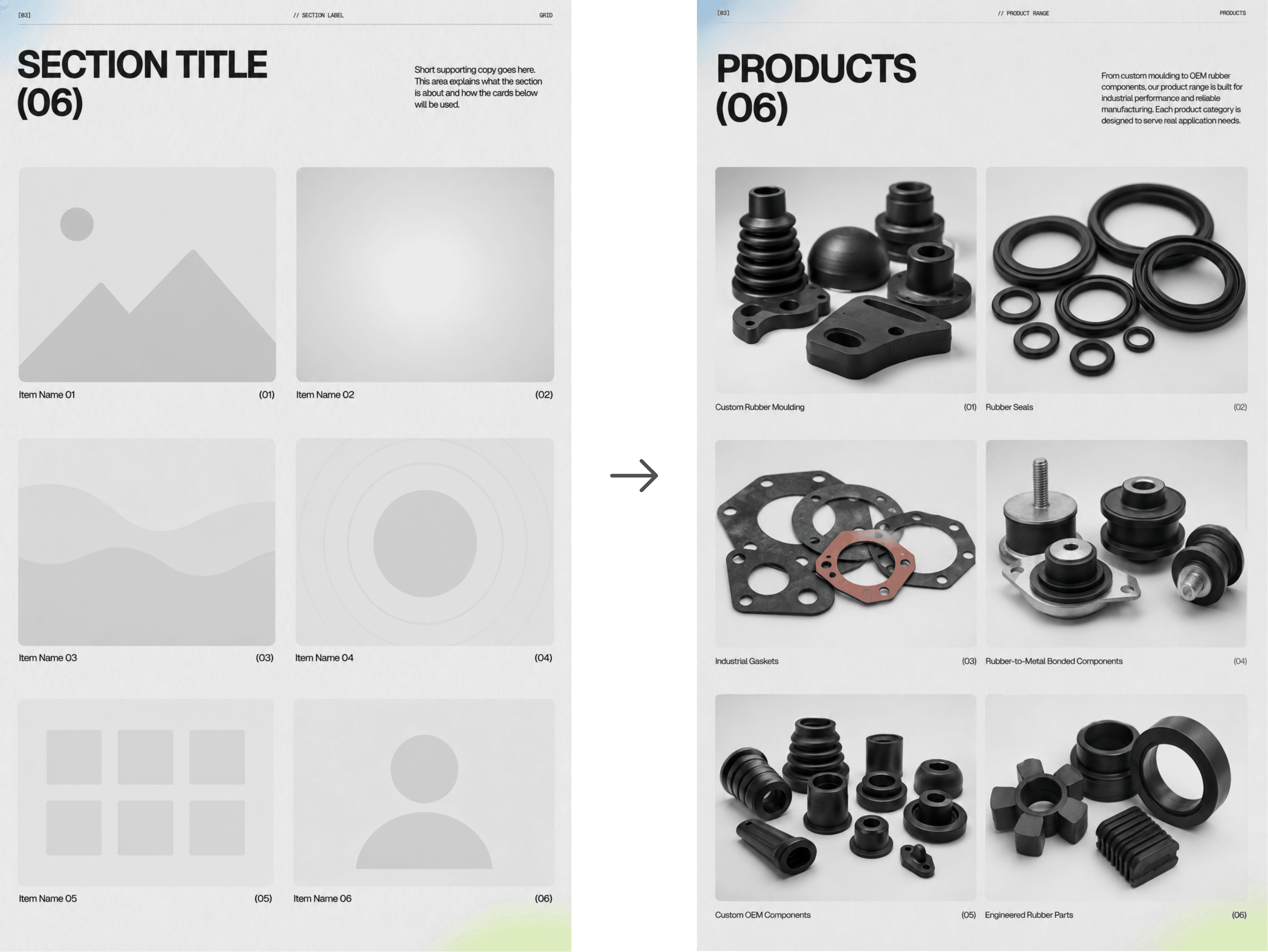
We use answers such as:
Q9: What products/services do you currently sell?
Q10: What do you plan to offer in the future?
Q17: Do you already have product photos?
Q18: Do you have specifications/features?
Q19: How many products/categories are there?
Q20: Should the presentation be technical or sales-focused?
What do we understand from this?
We understand what exactly needs to be shown on the website and how detailed it needs to be.
What can this become?
For example:
OUR PRODUCTS
01 — Custom Rubber Moulding
02 — Rubber Seals
03 — Industrial Gaskets
04 — Rubber-to-Metal Components
05 — Custom OEM Components
06 — Engineered Rubber Parts
If you have photos, specifications or catalogues, they can be connected to these sections.
04 — Why Should Someone Choose You?
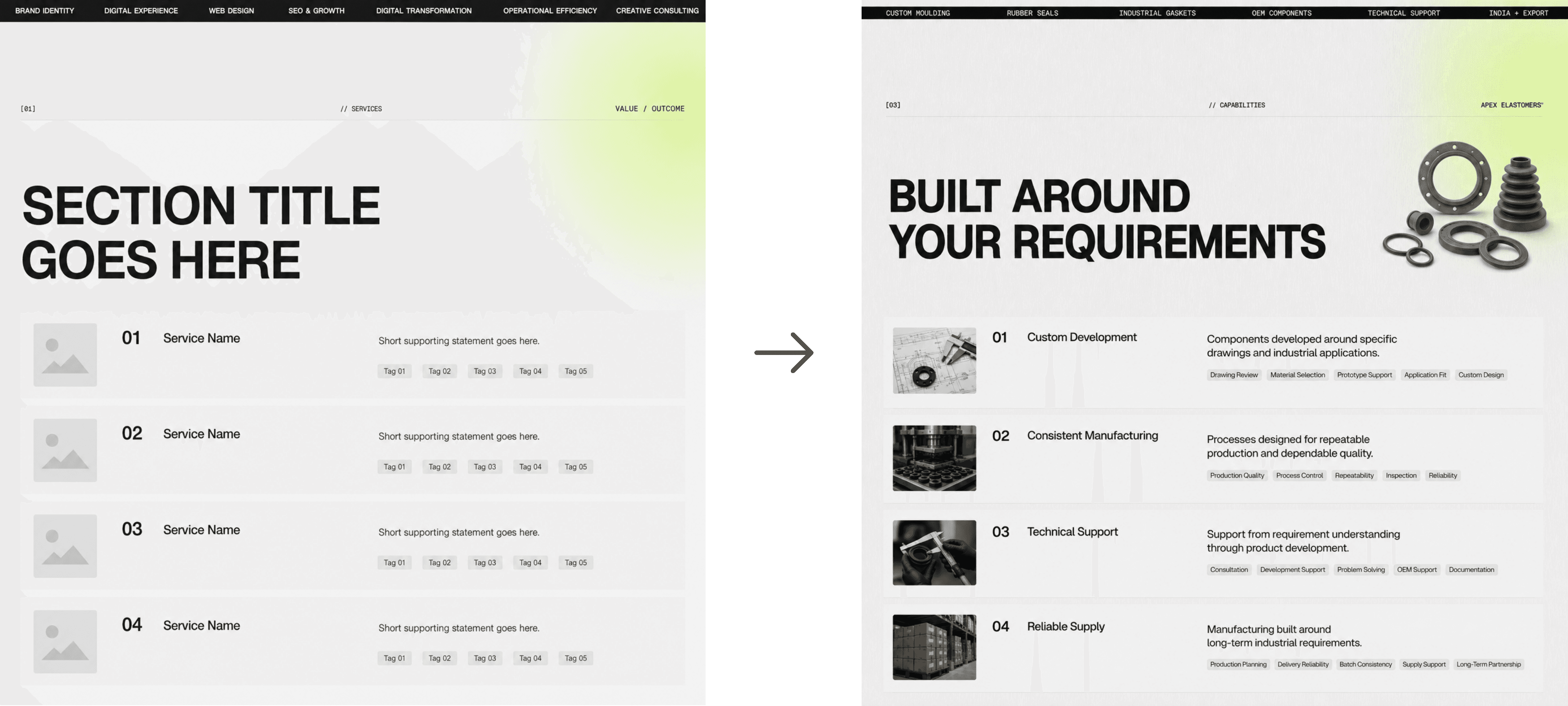
We use answers such as:
Q8: What does your business do?
Q9: What do you offer?
Q12: Who buys from you?
Q16: What should the brand feel like?
Q18: Features / technical information
Q22: Website goal
Q28: Additional notes
What do we understand from this?
We identify the things that make your company different.
For example:
Custom solutions
Better quality
Faster support
Reliable supply
Technical expertise
What can this become?
BUILT AROUND YOUR REQUIREMENTS
Custom Development
Built according to specific requirements.
Consistent Manufacturing
Reliable and repeatable production.
Technical Support
Help from requirement to final product.
Reliable Supply
Built for long-term business requirements.
Your simple answers become clear reasons for a customer to choose you.
05 — How You Sell / How Customers Work With You
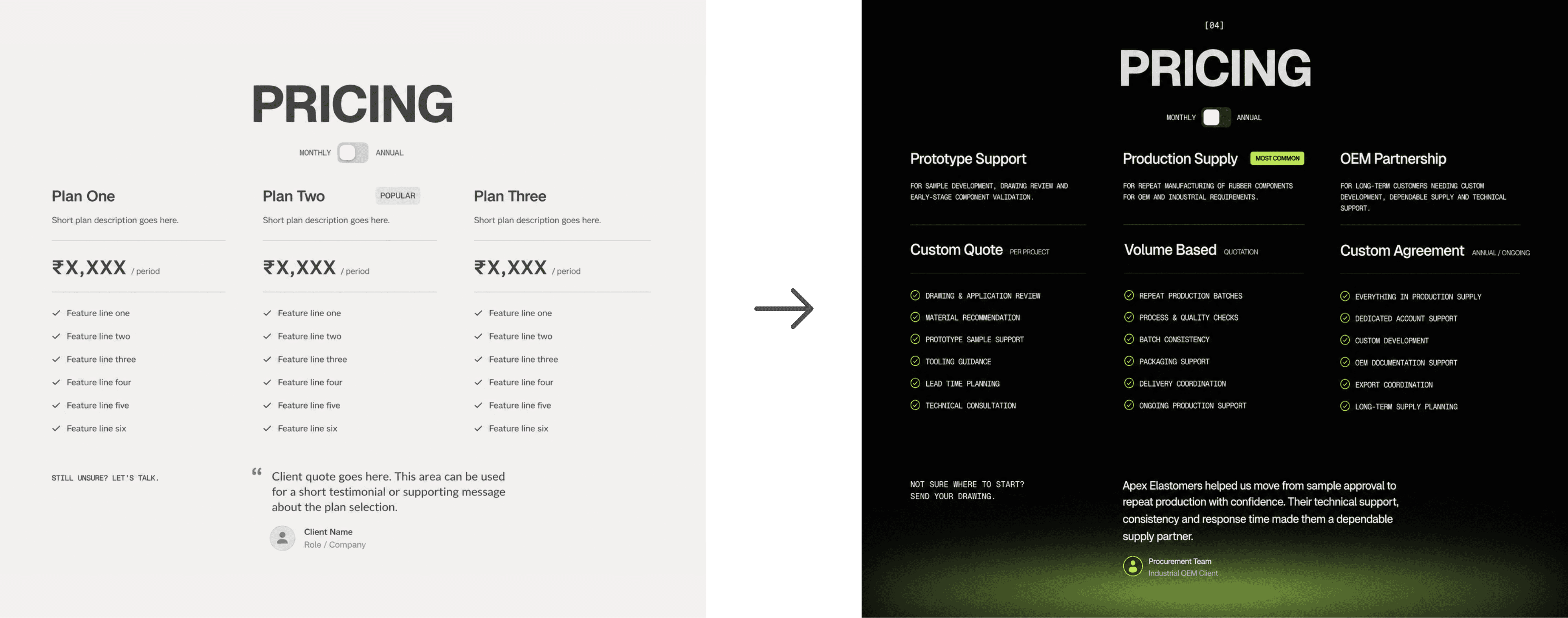
We use answers such as:
Q9: Products/services
Q12: Target customers
Q13: B2B or B2C?
Q18: Product details/specifications
Q20: Technical or sales-focused?
Q21: Type of website required
Q22: Main website goal
What do we understand from this?
We understand how a customer actually buys from you.
Not every company needs a normal pricing section.
A business may work through:
Fixed pricing
Quotations
Custom projects
Monthly plans
Bulk pricing
Long-term agreements
What can this become?
For a manufacturer, instead of random prices:
Prototype Support
Custom Quote
Production Supply
Volume-Based Quotation
OEM Partnership
Custom Agreement
For another business, the same section could become normal pricing plans.
The website should match how your actual business works.
06 — Your Process
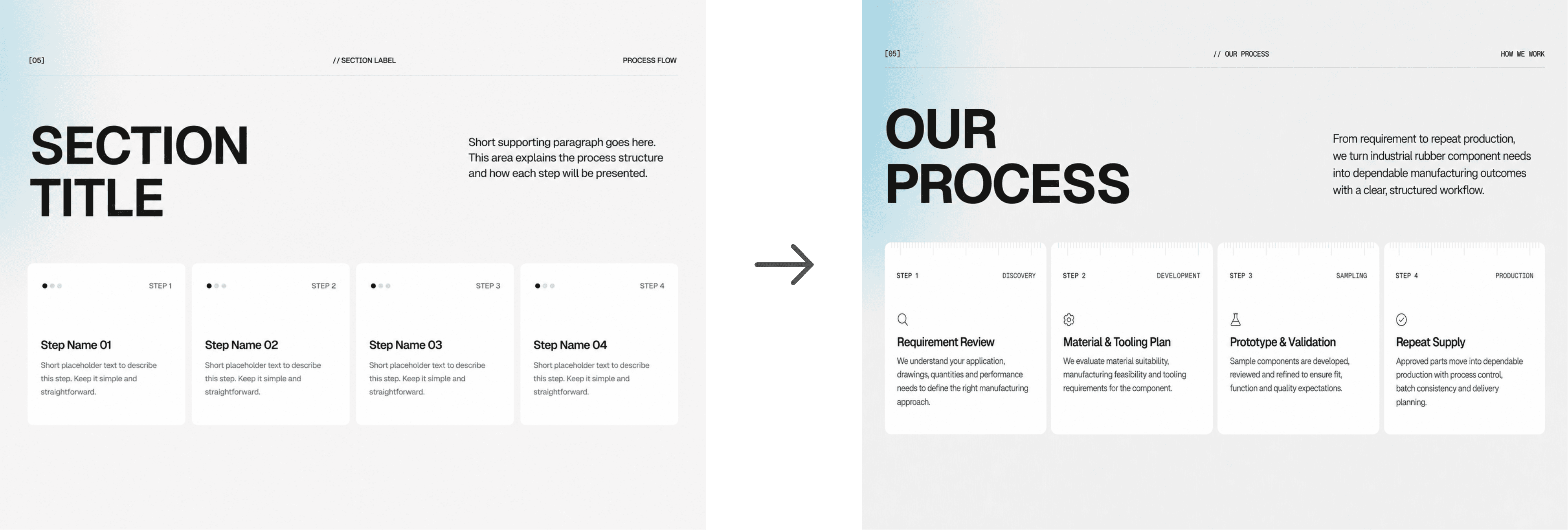
We use answers such as:
Q8: Business description
Q9: Products/services
Q18: Technical information
Q20: Technical or sales-focused presentation
Q22: Website goal
Q28: Additional notes
What do we understand from this?
We understand what normally happens between:
Customer enquiry → Work begins → Final delivery
What can this become?
OUR PROCESS
Step 1 — Requirement Review
Understand the requirement.
Step 2 — Development
Plan the right solution.
Step 3 — Sampling / Approval
Review and finalise.
Step 4 — Production / Delivery
Move into final execution.
This helps your customer understand what happens after they contact you.
07 — Trust / Client Experience
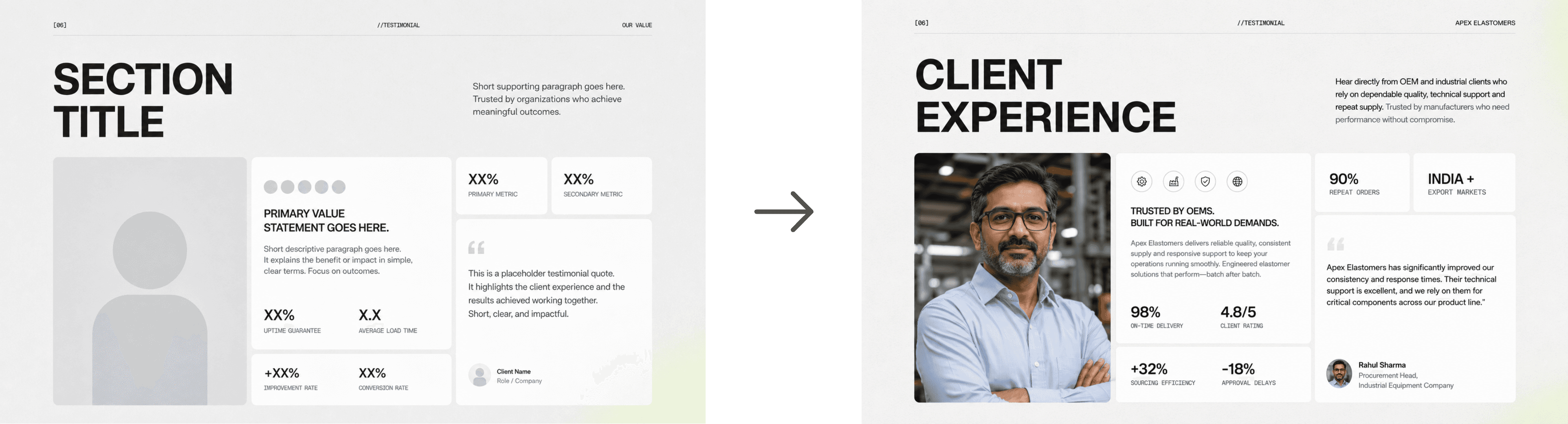
We use answers such as:
Q6: Existing or new business?
Q8: Business information
Q12: Who are your customers?
Q16: Brand personality
Q23: Existing written content
Q24: Certifications
Q28: Additional information
What do we understand from this?
We identify what proof already exists.
This may include:
Testimonials
Client names
Client logos
Ratings
Certifications
Years of experience
Performance numbers
Repeat customers
What can this become?
CLIENT EXPERIENCE
98%
On-Time Delivery
90%
Repeat Orders
4.8/5
Client Rating
Along with a client testimonial.
If you do not have this information yet, we simply know that we need to collect it later.
08 — Knowledge / Blogs / Insights
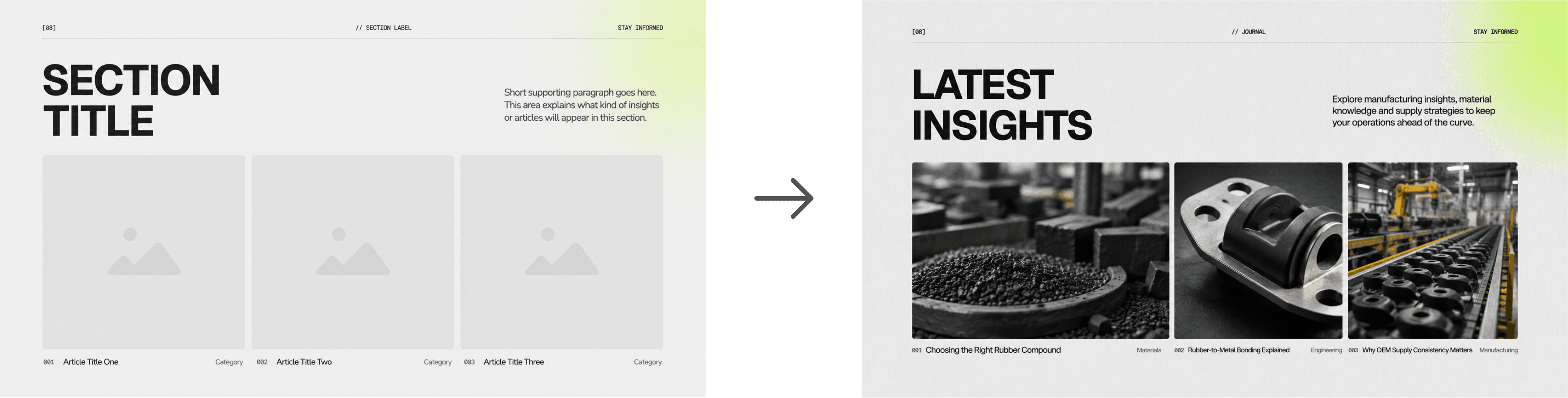
We use answers such as:
Q8: Business type
Q9: Products/services
Q11: Industries served
Q12: Target customers
Q18: Technical knowledge
Q21: Website type
Q22: Website goal
What do we understand from this?
We understand what topics your customers may want to learn about.
What can this become?
LATEST INSIGHTS
Choosing the Right Rubber Compound
Rubber-to-Metal Bonding Explained
Why OEM Supply Consistency Matters
This can later help with:
SEO
Customer education
Industry authority
Sharing useful information
09 — Frequently Asked Questions
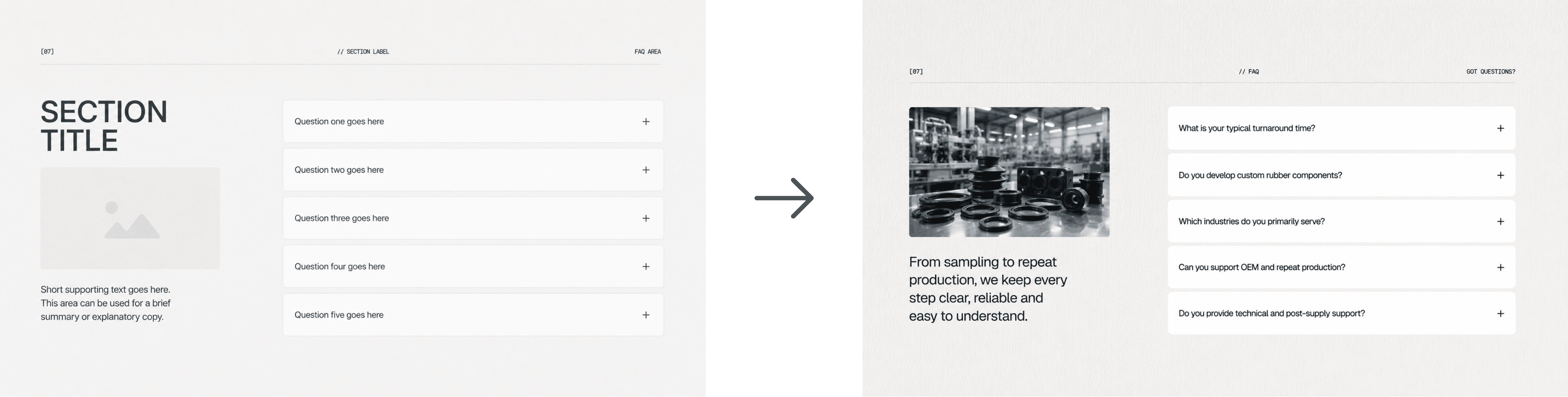
We use answers from:
Q8: Business description
Q9: Products/services
Q10: Future offerings
Q11: Industries
Q12: Customers
Q17: Product photos/assets
Q18: Technical details
Q19: Product categories
Q20: Technical or sales-focused
Q22: Website goal
Q28: Additional notes
What do we understand from this?
We identify the questions a customer is likely to ask before contacting you.
What can this become?
What is your typical turnaround time?
Do you develop custom products?
Which industries do you serve?
Do you support bulk or repeat orders?
Do you provide technical support?
This makes it easier for visitors to get basic answers without calling you for every small question.
10 — Contact Details + Overall Website Direction
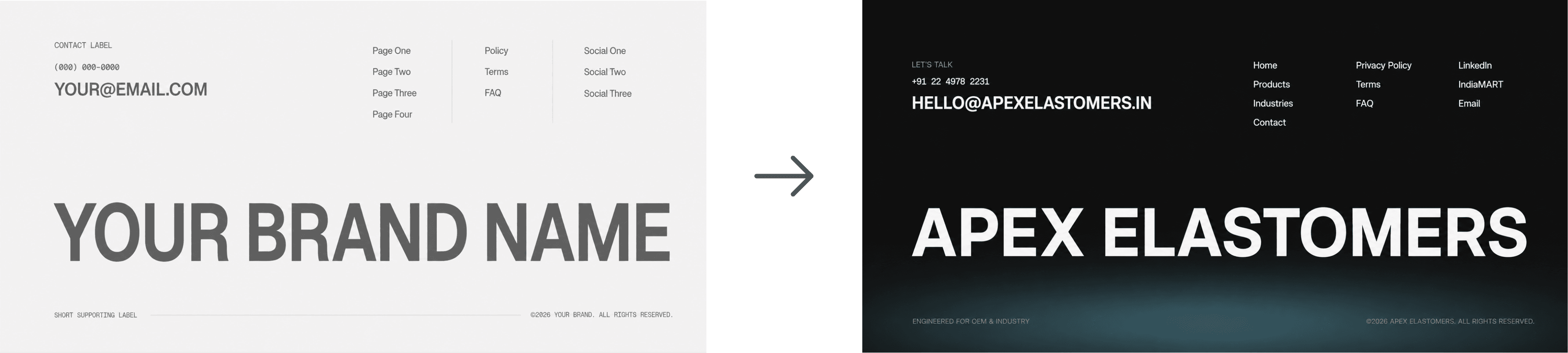
We use answers such as:
Q1: Contact Person Name
Q2: Contact Number
Q3: Email Address
Q4: Official Business Name
Q5: New Company Name
Q7: Location
Q14: Brands/competitors you like
Q15: Brand identity requirements
Q16: Brand personality
Q21: Website type
Q22: Website goal
Q23: Existing content
Q25: Project priority
Q26: Timeline
Q27: Launch date
Q28: Additional expectations
What do we understand from this?
This final group tells us two things:
1. What information should appear on the website
Such as:
Phone
Email
Location
Company Name
Social Links
Contact Button
2. How the complete website should feel and be built
For example:
Modern or traditional
Minimal or detailed
Premium or approachable
Website first or branding first
Content ready or content required
Launch urgently or normal timeline
What can this become?
LET'S TALK
+91 XX XXXX XXXX
Home
Products
Industries
Contact
YOUR COMPANY NAME
This information also helps us make decisions across the entire website — not just the footer.
So, What Do You Need to Do?
You only need to fill the form as clearly as you can.
You do not need to write website headlines or decide where information should be placed.
We take:
What you fill in the form
↓
Understand what is important
↓
Organise it into the right sections
↓
Turn it into website-ready content
↓
Design the final website
The images beside each section show exactly this:
Blank website structure → Your information → Finished website section.
Related Help Documents
From foundational design to advanced optimization — built for digital growth.

Learn how your product data moves from a CSV file into Shopify and becomes a complete e-commerce website, with every field explained simply.